

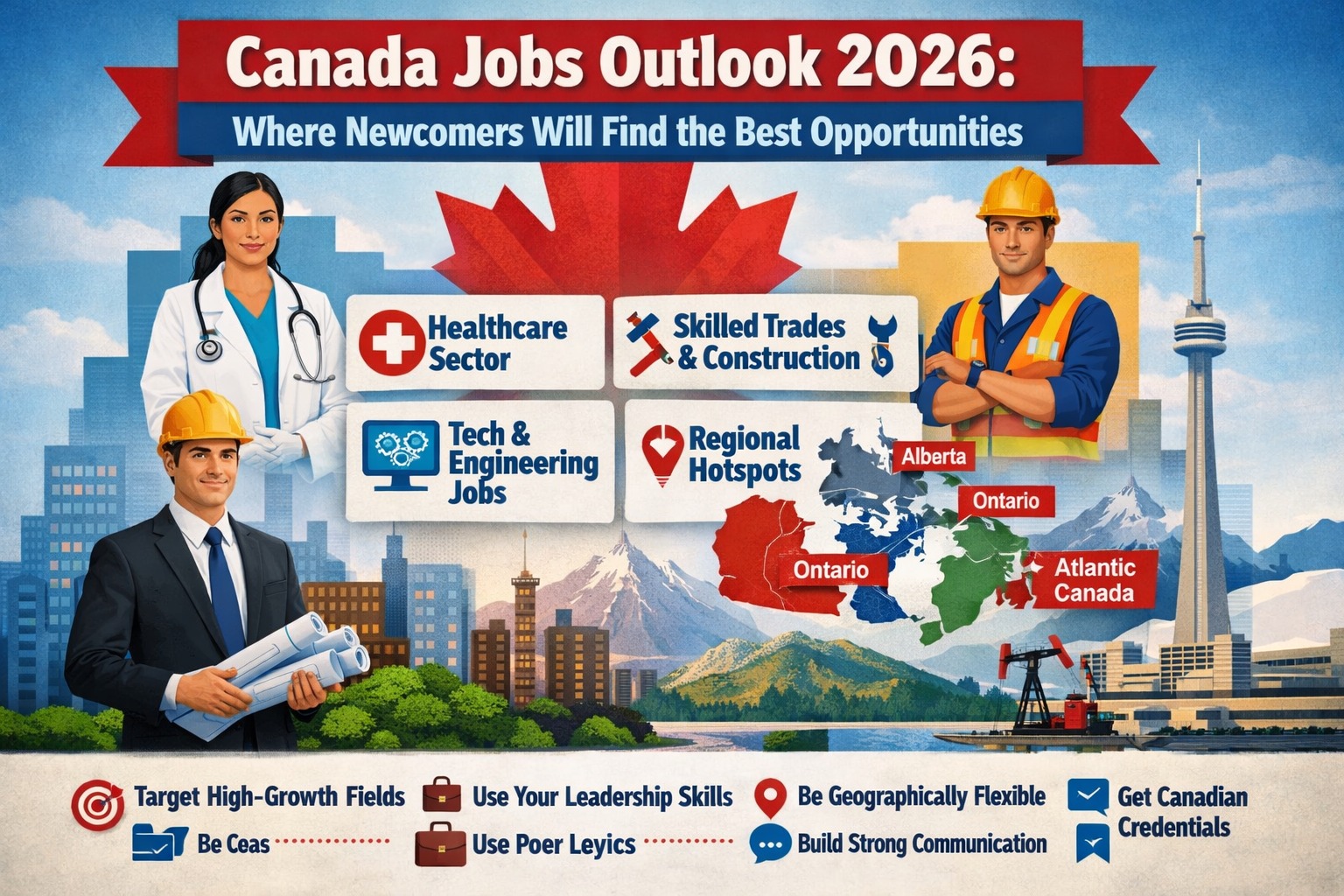
Canada Jobs Outlook 2026. Where Newcomers Will Find the Best Opportunities
Canada's labour market is entering a new phase. While hiring hasn't stopped, employers are being more strategic about who they bring on board. For newcomers planning to build their careers in Canada, understanding where the real opportunities lie has never been more important.
The Current State of Canada's Job Market
The good news? Canada's employment picture is stabilizing. According to Statistics Canada, the unemployment rate dropped to 6.5 per cent in November 2025, down from 7.1 per cent in September. The country added 54,000 jobs, with most growth happening in the private sector.
However, there's an important detail to note: much of this growth has been in part-time positions. Combined with more controlled immigration levels and slower population growth, this means newcomers face a competitive landscape one where preparation and strategy make all the difference.
High-Demand Sectors for 2026
Healthcare: The Clear Leader
Healthcare continues to dominate Canada's employment landscape, and that trend isn't slowing down. According to talent acquisition expert Sajithkumar Swaminathan, approximately 72 per cent of health-related occupations currently show positive growth prospects.
"Canada's aging population and persistent staffing shortages are creating opportunities that go well beyond frontline care," Swaminathan explains. "We're seeing demand for roles that blend healthcare expertise with technology."
The numbers back this up healthcare and social assistance added 79,000 jobs in the past year alone, making it one of Canada's fastest-growing sectors.
Skilled Trades: Building Canada's Future
With ongoing housing construction, major infrastructure projects, and a wave of retirements in the trades, demand for skilled tradespeople continues to climb. Whether you're an electrician, plumber, welder, or construction manager, opportunities are expanding across the country.
Professional and Technical Services
Despite some cooling in consumer-facing tech roles like web development and gaming (due to automation and AI), certain technical positions remain in high demand.
"Information systems specialists, engineering managers, and civil engineers are particularly sought after," notes Swaminathan. "Employers want people who can combine technical knowledge with strong leadership and communication abilities."
Manufacturing has also held steady despite global economic pressures, offering stable opportunities for skilled workers.
Sectors to Watch Carefully
Not every sector is thriving. Wholesale and retail trade lost 34,000 jobs in November, with Ontario and Quebec hit hardest. Some digital roles have softened as companies turn to automation for routine tasks.
The key takeaway? Generic, broad-based roles are becoming harder to land, while specialized, high-skill positions remain strong.
Where Are the Jobs? Regional Breakdown
Location matters significantly when it comes to job opportunities in Canada.
Alberta led employment growth in late 2025, followed by New Brunswick and Manitoba.
Ontario, particularly the Toronto–Hamilton–Waterloo corridor, remains Canada's largest job market with consistent demand in healthcare, education, and professional services.
Ottawa is expected to see renewed growth in 2026 as federal technology modernization initiatives resume.
British Columbia and Alberta continue to show strong demand for healthcare technology and tech services more broadly.
Atlantic Canada faces ongoing labour shortages, particularly in healthcare, hospitality, and infrastructure making it an attractive entry point for newcomers willing to consider smaller markets.
Strategic Advice for Newcomers
Success in Canada's 2026 job market requires a focused approach. Here's what you need to know:
1. Target High-Growth Sectors
Healthcare, skilled trades, and specialized technology roles offer the most reliable pathways. Avoid competing for oversaturated positions in project management, business analysis, or quality assurance in major cities unless you have exceptional credentials.
2. Consider Your Leadership Experience
"There's a growing gap in leadership roles," Swaminathan points out. "Newcomers with management experience may find better opportunities by pursuing regulated professions or supervisory pathways over time."
3. Be Geographically Flexible
The fastest path to Canadian work experience often lies outside Toronto and Vancouver. Regions facing acute labour shortages can offer quicker entry points and valuable initial experience.
4. Invest in the Right Credentials
Canadian licensing, certifications, and credential recognition matter. Research what's required in your field and start the process before you arrive, if possible.
5. Strengthen Your Communication Skills
Technical expertise alone isn't enough. Canadian employers consistently prioritize strong communication, collaboration, and cultural fit alongside hard skills.
The Bottom Line
2026 presents real opportunities for newcomers but success requires strategy. The days of broad job searches and generic applications are behind us. Today's Canadian job market rewards those who:
- Understand where demand is genuinely strong
- Have the credentials employers require
- Can demonstrate both technical skills and soft skills
- Are willing to be flexible about location
- Invest time in understanding Canadian workplace culture